Raw Meets Refined: Create Excitement with Contrasts in Your Interior Design

Raw Meets Refined: Create Excitement with Contrasts in Your Interior Design
When raw meets refined, something special happens. The tension between rough and polished elements brings energy and depth to a space. Contrasts in materials, colors, and shapes can make a room feel more dynamic and personal. It’s not about choosing one style over another—it’s about letting opposites complement each other in a way that feels balanced and authentic. Here’s how you can use contrast to create excitement in your home.
Why Contrasts Work
A room without contrast can feel flat and predictable. When you pair rough with smooth, dark with light, or matte with glossy, you create visual interest and movement. Contrasts catch the eye and invite curiosity—they make a space feel alive.
They also help highlight individual design elements. A raw brick wall, for example, looks even more striking next to a sleek brass lamp or a plush velvet sofa. The key is balance: let each element shine without overpowering the other.
Materials with Edge and Character
One of the most effective ways to play with contrast is through materials. Mixing textures and finishes can completely transform the mood of a room.
- Wood and metal – the warmth of natural wood pairs beautifully with the cool, industrial feel of metal. Try it in dining tables, shelving, or lighting fixtures.
- Concrete and fabric – the raw, gray surface of concrete softens when combined with cozy textiles like wool, cotton, or velvet.
- Leather and glass – the tactile richness of leather contrasts elegantly with the smooth, reflective quality of glass.
When mixing materials, think about proportion and repetition. A single raw element can add just the right amount of edge, while too many can make a space feel heavy.
Læs også:
Colors That Play Off Each Other
Color is another powerful tool for creating contrast. You can work with tonal contrasts—like black and white—or emotional contrasts, where warm and cool hues meet.
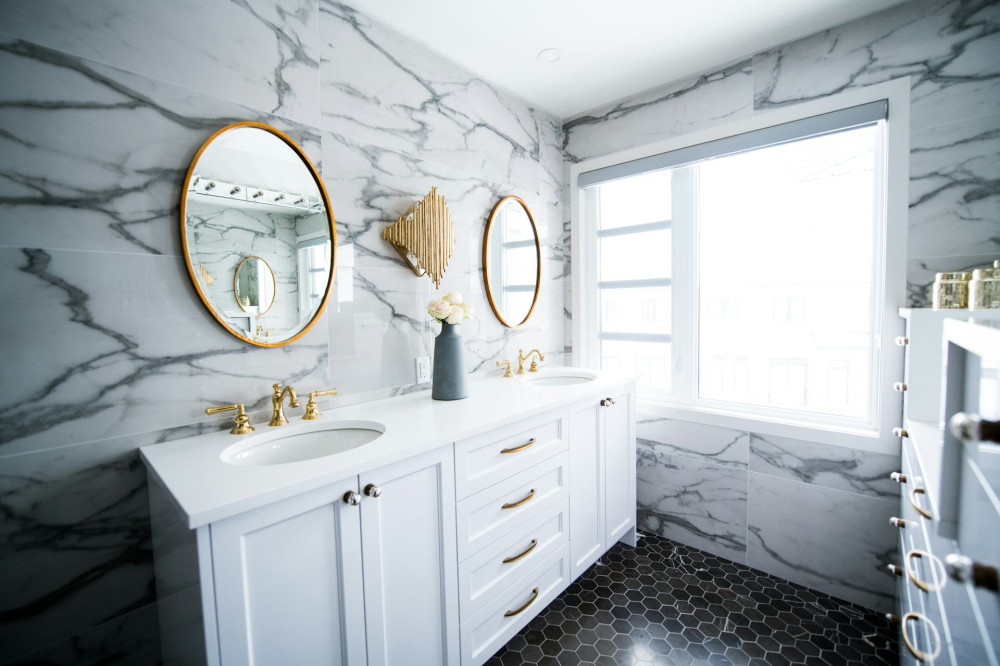
A dark floor can ground a bright room, while a deep navy wall can make light wood furniture pop. If you’re feeling bold, experiment with colors that sit opposite each other on the color wheel, such as green and pink or blue and orange. The result is vibrant and artistic.
For a calmer look, stick to a neutral palette and let contrast come through in textures and materials instead.
Shapes and Lines in Dialogue
Contrast isn’t just about color and texture—form matters too. Soft, organic shapes bring a sense of flow and comfort, while sharp, geometric lines add structure and modernity.
Think of a round mirror above a square console, a plush sofa against a raw concrete wall, or a minimalist pendant lamp over a rustic dining table. The interplay between soft and structured forms creates visual rhythm and balance.
Light as a Contrast Creator
Lighting is often the unsung hero of interior design. The right light can highlight textures, cast intriguing shadows, and add depth. Combine different light sources—overhead fixtures, floor lamps, and candles—to create layers and atmosphere.
Warm light can soften an industrial space, while cooler light can make a room feel crisp and contemporary. Pay attention to natural light, too—it changes throughout the day, subtly shifting how colors and materials appear.
Find Your Own Balance
There’s no strict formula for how much raw or refined a space should have. What matters most is finding a balance that feels right for you. Start with a neutral foundation, then add elements that surprise—a vintage vase on a modern table, an industrial lamp in a traditional room, or a soft throw on a leather chair.
When you dare to mix styles and materials, you create a home that tells a story—your story. Because it’s in the contrasts that your personality truly shines.
Læs også: