Creative Play with Simple Materials: Boxes, Blocks, and Fabric as Building Blocks of Imagination


Creative Play with Simple Materials: Boxes, Blocks, and Fabric as Building Blocks of Imagination
In a world where children’s toys often come with screens, sounds, and flashing lights, it can feel almost old-fashioned to hand a child a cardboard box, a pile of blocks, or a piece of fabric. Yet these simple materials hold incredible potential for creativity, problem-solving, and joyful learning. When kids are free to imagine without preset rules, play becomes a space for discovery and growth.
Why Simplicity Sparks Imagination
When a toy doesn’t dictate how it should be used, the child becomes the creator. A cardboard box can instantly transform into a spaceship, a grocery store, or a secret fort. A piece of fabric can become a superhero cape, a tent, or the ocean for a make-believe voyage. Open-ended play like this encourages children to invent stories, experiment, and find creative solutions along the way.
Research in child development shows that unstructured play supports both creative thinking and social skills. Children learn to collaborate, negotiate, and adapt—all through something as simple as a few everyday materials.
Boxes – From Recycling to Adventure
Cardboard boxes are among the most versatile play materials you can offer. They can be cut, painted, taped, and rebuilt again and again. A large box might become a race car or a rocket ship, while smaller ones can be stacked into towers or turned into building blocks.
Try saving boxes from deliveries or grocery trips and let your kids decide what to make. Add some markers, tape, and scissors, and watch an ordinary afternoon turn into a creative workshop. It’s a great way to reuse materials and spark imagination at the same time.
Blocks – The Classic That Never Gets Old
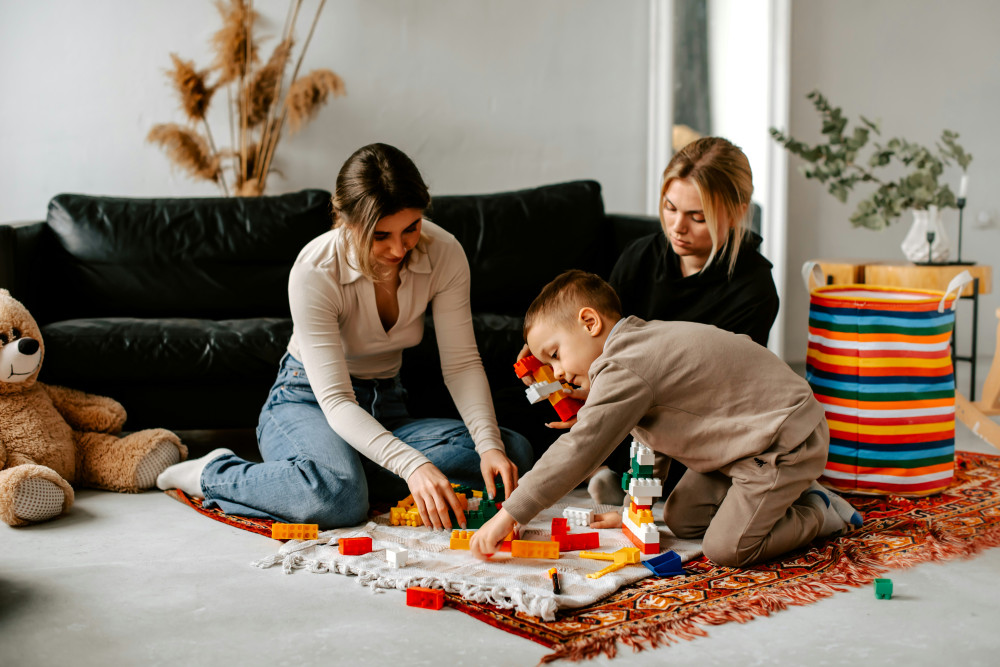
Blocks have been a staple of childhood for generations—and for good reason. They help develop fine motor skills, spatial awareness, and patience. They also teach resilience: every time a tower falls, a new one can rise.
You don’t need expensive sets to get started. Wooden blocks, large plastic ones, or even homemade blocks from milk cartons can provide hours of fun. Younger children love stacking and knocking them down, while older kids can experiment with balance, symmetry, and design.
Læs også:




Fabric – Movement, Pretend Play, and Comfort
A simple piece of fabric can be anything: a costume, a curtain, a sail, or a landscape. It invites movement and role play, allowing children to express themselves through action and imagination. Fabric can also create cozy spaces—a blanket draped over chairs becomes a fort, a quiet retreat, or a reading nook.
You don’t need to buy special materials. Old sheets, scarves, or curtains work perfectly. Combine them with clothespins, string, and pillows, and you’ve got endless possibilities for creative play.
How Adults Can Support Creative Play
Adults play an important role—not as directors, but as partners and encouragers. Ask open-ended questions like, “What could this become?” or “How can we make it stand up?” These prompts help children think critically without taking control of their play.
Allow for mess and experimentation. Creative play is rarely tidy, but it’s full of learning. When children are free to try, fail, and try again, they learn that mistakes are part of the creative process.
Simple Materials, Big Adventures
Meaningful play doesn’t require batteries, screens, or fancy gadgets. In fact, the simplest materials often lead to the richest experiences. When children are given the freedom to build, invent, and dream, they develop not only imagination but also the ability to see potential in the world around them.
So next time you’re about to toss out a cardboard box or an old sheet, pause for a moment. You might just be holding the beginning of a brand-new story.
Læs også: